
Home > Blog detail
Nov 2025
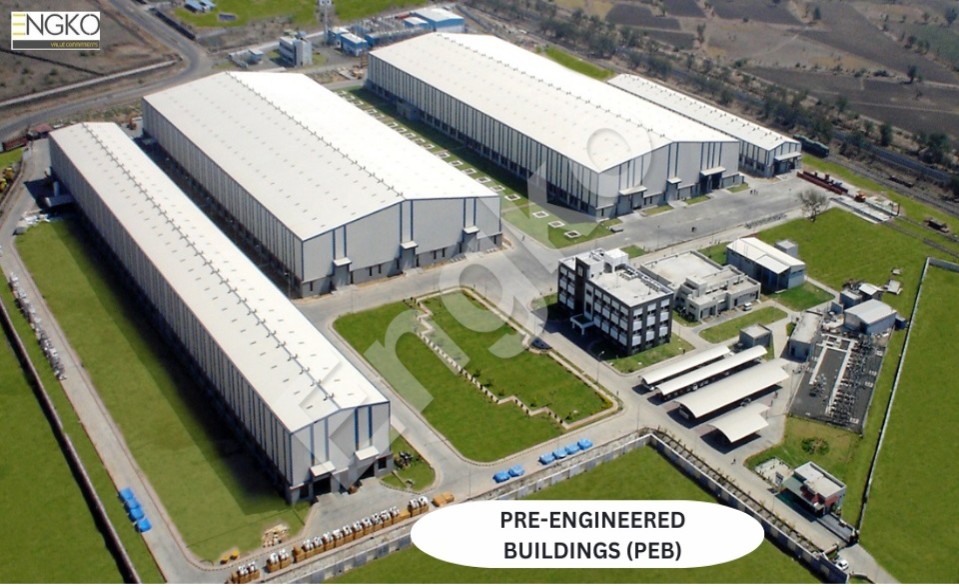
Pre-engineered building construction or prefabricated construction is very common, but in the last few years, pre-engineered buildings (PEB) have become popular in developing countries like India, and the Industrial sector is the early adopter of pre-engineered buildings. In modern India, almost 95% of Industrial sheds, warehouse buildings, and factory buildings are constructed with pre-engineered technology. Factory owners and Landowners are getting enormous benefits using prefabricated technology. Important reasons why these prefabricated structures are best suited for industrial sheds, warehouse buildings, and factory sheds include construction time, environmental friendliness, and low maintenance.
With the advancement of technology, societies have undergone significant changes throughout history. Technology has played a vital role in the way humans behave and operate in the world. Over the years, Technology used in building has also changed. Prefabricated building is one of the biggest changes adopted by the construction industry. Almost 85% of the commercial buildings, industrial buildings, hospitals, schools are pre-engineered today in India. There is no doubt that pre-engineered buildings (PEB) are the high demand in construction technology in this modern era.
Pre-engineered buildings are different from onsite fabrications. Pre-engineered buildings are those that are built in a factory in a controlled environment with modern machinery and then assembled at the site as per the drawings provided by the structural engineers using high tensile nut bolts, fasteners that are specific to the structure. This way, one can complete building in a quick period and be cost-effective.
Pre-engineered buildings (PEB) are still new in India, but their use in government organizations and businesses is growing quickly. In the past few years, Indian infrastructure has grown quickly, whether it is commercial, industrial, institutional, or health. Nowadays, buildings constructed using pre-engineered technology are more beautiful and stronger, even though they are more complicated than the ones that we had few decades ago. PEB are designed in such a way that buildings are light in weight with no effect on strength on the other hand.
What does “pre-engineered” mean? It means all building specifications as per the needs of the client shall be figured out before it is built. Before manufacturing, highly quailed structural engineers work on different elements or parameters like design loads, foundations, and cladding options to provide an optimal solution and cost-effective building to the client. This means that pre-engineered buildings (PEB) can be made in a way the owner wants.
In India use of Pre-engineered buildings (PEB) in industrial and non-residential buildings is growing quickly. As per the reports, pre-engineered buildings that can be made each year in India are around 10.00 lac tonnes. This is growing at a steady rate of 25-30 percent.
This is happening because Pre-engineered buildings (PEB) have more advantages over traditional buildings. These PEBs are lightweight, cost-effective, and last for a long time. Most importantly, PEBs are 30-60% faster than traditional buildings. This is the biggest reason people around the world start saying that pre-engineered buildings (PEB) are the future of modern infrastructure.
Engko Engineering is the fastest-growing pre-engineered buildings manufacturer in India with over 13 years of experience. We provide complete turnkey solutions for PEB factory sheds, warehouse buildings, industrial sheds, and aircraft hangars.
Q: What are the main components of a PEB?
A: The main components of a PEB include primary frames (columns and rafters), secondary members (purlins and girts), cladding (roof and wall panels), and accessories (doors, windows, ventilators, etc.).
Q: What materials are used in PEB construction?
A: PEBs typically use high-strength steel for the structural framework and metal sheets or insulated panels for cladding. Some PEBs also incorporate concrete or masonry for specific elements like foundations or partitions.
Q: How are PEBs different from conventional buildings?
A: PEBs are designed and fabricated off-site, which reduces construction time and labor costs. They offer greater flexibility in design, are more cost-effective, and can be easily expanded or modified.
Q: What are the advantages of using PEBs?
A: Advantages include faster construction time, cost savings, flexibility in design, lower maintenance, energy efficiency, and ease of expansion or relocation.
Q: How long does it take to construct a PEB?
A: Construction time can vary depending on the size and complexity of the building, but generally, PEBs can be completed in a matter of weeks to a few months, significantly faster than traditional construction methods.
Warehouse Manufacturers
Factory Building
PEB Stadium
PEB Terminal Buildings
Prefabricated Canteen
Call
: +91-9667986005